If you ask five contractors how to pile a site in Bengaluru, you may get five different answers — and that's not necessarily a red flag. Bengaluru's subsurface is genuinely inconsistent: weathered rock close to the surface in some pockets, deep lateritic soil in others, and localised soft or filled-up ground near old tank beds and low-lying areas. The "right" piling method is the one that matches what's actually under your site, not a default choice carried over from the last project.
Why Bengaluru's Soil Doesn't Behave Like a Textbook
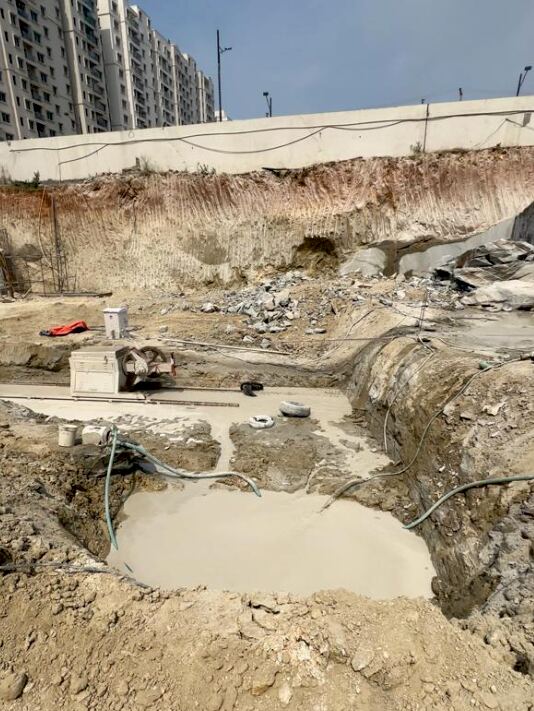
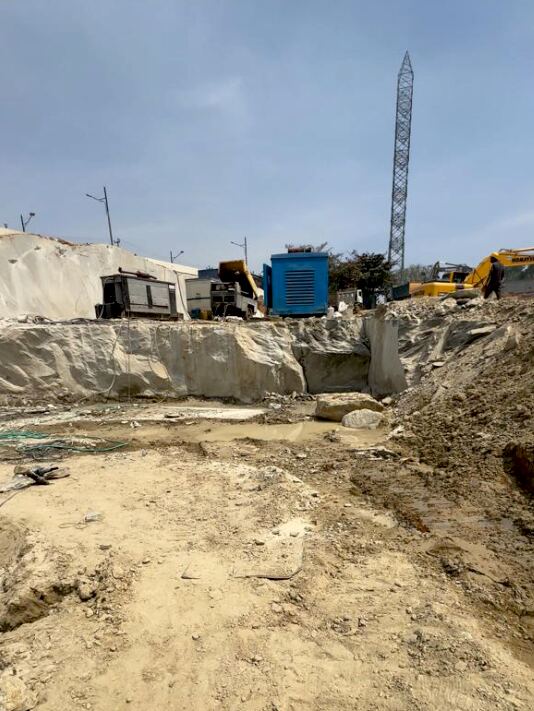
Much of Bengaluru sits on residual soils formed from weathered granite and gneiss — often described loosely as "murram" or decomposed rock. Depth to hard strata can vary sharply within the same plot, especially near valleys, old lake beds and reclaimed land. This is why a soil investigation report from a neighbouring plot is not a safe substitute for testing your own site; bearing capacity and rock depth can change by several metres over a short distance.
Watch: How Bored Piling Works
Bored piling is the method used most often on Bengaluru's mid- and high-rise sites, so it helps to see the sequence in motion — boring, casing, reinforcement placement and concreting — before reading through how each method compares below.
Sample animation for illustration — general bored-pile sequence, not a VAP Group site.
The Main Piling Methods, in Plain Terms
- Bored (cast-in-situ) piling — a hole is drilled to the required depth, reinforcement is lowered in, and concrete is poured in place. This is the most common method for mid- and high-rise structures in Bengaluru because it handles variable strata well and generates comparatively low vibration.
- Driven precast piles — pre-cast concrete piles are driven into the ground with a hammer. Faster in uniform soil, but vibration and noise make this a poor fit for dense urban plots with neighbouring structures.
- Micropiling — small-diameter piles (typically under 300mm) installed with compact rigs. Ideal for restricted-access sites, underpinning existing structures, or basements where headroom is limited.
- Auger piling — a continuous flight auger bores and often concretes the pile in a single pass, useful for faster, lower-vibration installation in moderately consistent soil.
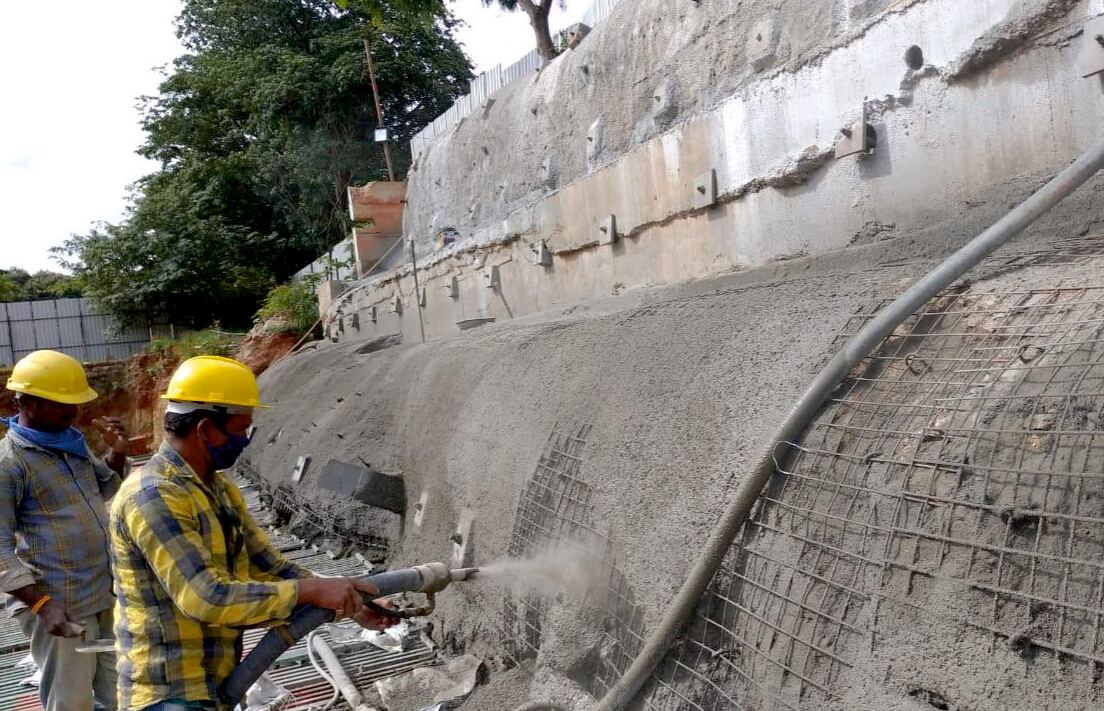
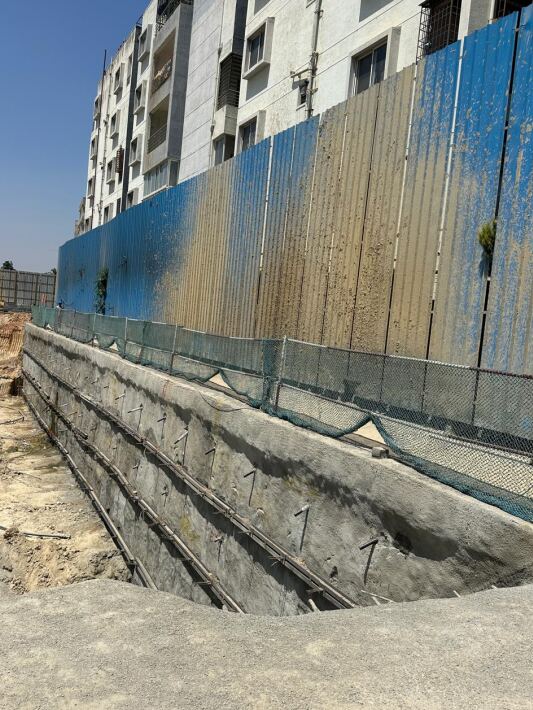
- Secant and sheet piling — used less for load-bearing and more for excavation support and basement retention, especially where dewatering also needs to be controlled.
Matching the Method to the Site — Not the Other Way Around
Four factors usually decide the method before cost even enters the conversation:
- Load requirement — a 30-storey tower and a two-storey warehouse extension are not solving the same structural problem.
- Site access — narrow lanes and tight urban plots in areas like Doddanekundi or Whitefield often rule out large rigs, pushing the decision toward micropiling or compact rotary rigs.
- Vibration and noise sensitivity — sites next to occupied buildings or sensitive structures generally can't tolerate driven piling.
- Groundwater conditions — a high water table changes both the piling method and the dewatering plan that has to run alongside it.
Verification Isn't Optional
Whichever method is used, pile integrity and load-bearing capacity should be verified — typically through pile load tests and, where relevant, integrity testing on a sample of piles. Skipping this step to save time is one of the more expensive mistakes a project can make, because problems discovered after the superstructure has begun are far costlier to fix than problems caught at the foundation stage.
Questions Worth Asking Any Piling Contractor
- Has a proper soil investigation (borehole log, SPT values) been done for this specific plot?
- Is the rig and crew owned and operated directly, or subcontracted?
- What load testing will be carried out, and on what percentage of piles?
- How will vibration and noise be managed if there are neighbouring structures?
A contractor who can answer these clearly — and who has done the work with their own crews on comparable Bengaluru sites — is usually a safer bet than the lowest quote on paper.